

Sunset Pediatrics

Portland Pediatric Clinic

Portland, Oregon     Patient Portal Pay Bill                  


  • Our Providers
  • Our Office
    • Office Hours
    • Location & Directions
    • Our Policies
    • Mission, Vision, Values
  • Appointments
    • New Patient
    • Well Child Visits
  • 2025 Flu Clinic
  • 2025 COVID
  • Newborn Care Classes
  • Patient Resources
  • News
    • RSV Immunization – Beyfortus
    • Blog Posts
    • Subscribe to our newsletter!

Credit Card on File is here!

Posted on December 21, 2018

We are excited to share that starting January 1st, 2019, Sunset is launching our Credit Card on File program!

What does this mean for my family?

  • When you come in for your child’s visit, we will ask you to provide a credit or debit card number to keep on file for your child’s account.
  • After your child’s visit, we will bill your insurance.
  • Once your insurance company processes the claim, they will send you an Explanation of Benefits (EOB) notifying you of your share of the financial responsibility.
  • After you have received your EOB, your insurance company sends Sunset that information and we process their payment.
  • On Tuesdays, the remaining balance owed by you will be charged to your credit/debit card on file and you will be emailed a receipt.

Important things to know

  • While most balances fall below this amount, the maximum amount your card will ever be charged at one time is $250.
  • If your balance is larger than that, a member of our billing staff will contact you to arrange payment.
  • Most insurance companies cover well child checks at no cost to you. It is important for you to know your insurance benefits as it relates to well child and sick visits. Contact your insurance directly for this information.
  • If you wish to make a payment arrangement, you must contact our office as soon as you receive your EOB and we will be happy to set up a payment plan.
  • Starting June 1st, 2019, having a credit or debit card on file will be a requirement to be a patient at Sunset.

Frequently asked questions

How will I know what my portion of my child’s visit I am responsible for?

  • Your insurance company is required by law to send you an Explanation of Benefits (EOB) which details how much they paid or did not pay and what portion of the visit you will be responsible for. You can call your insurance at any time to check how much of your deductible has been met. Some insurances have this information available online.

When do I give you my credit card?

  • You will give us your card at the time of your visit. We will swipe your credit card with an encrypted reader that will securely upload your information to the company who processes our credit card payments.

But wait, I’m nervous about leaving my credit card information.

  • We do not store your sensitive credit card information in our office. Once the card is swiped, only the last four digits of your account number is visible to our staff. Your credit card on file is considered protected health information under HIPAA, and therefore far more secure than most retail establishments as it relates to identity theft.

I have a Health Savings Account (HSA) or a Flex Spending Account (FSA), can I leave that on file?

  • Yes, you can keep your HSA or FSA on file, however, we may require an additional card to be kept on file should the funds in your account become insufficient.

Who do I call if I have any questions or concerns?

  • We do all our billing in our office. Our billing specialist is in the office Monday through Thursday from 8AM to 5:30PM. Please do not hesitate to call us!
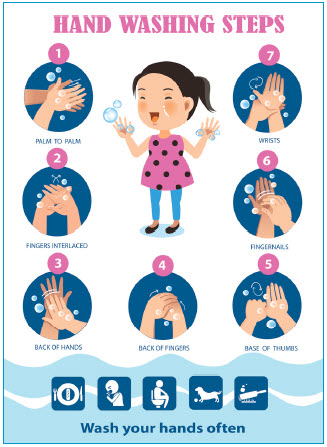
Stay healthy this winter and wash your hands properly!

Posted on December 7, 2018

With the winter season quickly approaching, one of the most important steps we can take to avoid getting sick and spreading germs to others is keeping our hands clean.

Make sure you and your kiddos wash your hands:

  • Before, during and after preparing food
  • Before eating food
  • Before and after caring for someone who is sick
  • Before and after treating a cut or wound
  • After using the restroom
  • After changing diapers or helping a child use the toilet
  • After blowing your nose, coughing or sneezing
  • After touching an animal, animal feed or animal waste
  • After handling pet food or pet treats
  • After touching garbage

Follow these steps for proper hand washing:

  • Wet your hands with clean, running water (warm or cold), turn off the tap and apply soap.
  • Lather your hands by rubbing them together with the soap. Be sure to lather the backs of your hands, between your fingers, and under your nails.
  • Scrub your hands for at least 20 seconds. Hum the “Happy Birthday” song from beginning to end twice for a fun way to time yourself!
  • Rinse your hands well under clean, running water.
  • Dry your hands using a clean towel or air dry them.

If you don’t have soap and running water, alcohol-based hand sanitizers can help in most situations. Sanitizers can reduce the number of germs in some situations, but sanitizers do not get rid of all types of germs and might not remove harmful chemicals.

This blog is not a substitute for medical advice. Be sure to talk to your child’s medical provider with any questions.

New car seat guidelines!

Posted on November 9, 2018

Motor vehicle crashes are the leading cause of death for children 4 years and older. The American Academy of Pediatrics (AAP) recently updated their guidance on rear-facing car seats. Previously, the AAP specified children should remain rear-facing at least to the age of 2. The new recommendation removes the specific age milestone.

  • All infants and toddlers should ride in a rear-facing car seat as long as possible, until they reach the highest weight or height allowed by their car seat’s manufacturer. 
  • All children who have outgrown the rear-facing weight or height limit should use a forward-facing car seat with a harness for as long as possible, again, up to the highest weight or height allowed by their car seat’s manufacturer.
  • All children whose weight or height is above the forward-facing limit for their car seat should use a booster seat until the vehicle lap and shoulder seat belt fits properly. This is usually when they have reached 4 ft 9 inches in height and are between 8 and 12 years of age.
  • When children are old enough and large enough to use the vehicle seat belt alone, they should always use lap and shoulder seat belts.
  • All children younger than 13 years should be seated in the rear seats of vehicles.

When a child rides in a car in the rear-facing seat, the head, neck and back are all supported by the hard shell of the car seat. In the event of a crash, the car seat absorbs most of the shock and protects the most vulnerable parts of the body. When a child rides forward-facing, their bodies are only restrained by the harness straps. For toddlers, whose heads are large and heavy compared to the rest of their bodies, this can mean possible back and head injuries as the head is thrown forward in a crash.

Using the right car seat or booster for every trip lowers the risk of death or injury by more than 70 percent!

Read more on the AAP website here.

This blog is not a substitute for medical advice. Be sure to talk to your child’s medical provider with any questions.

Happy Halloween!

Posted on October 26, 2018

Fall celebrations like Halloween are fun times for children, who can dress up in costumes, enjoy parties and eat yummy treats.  These celebrations also provide a chance to give out healthy snacks, get physical activity and focus on safety.

While fun for everyone, Halloween poses special safety risks.  Did you know that children are twice as likely to be run over by an automobile on Halloween than on any other nights of the year?  To help you prepare for the festivities, check out the following Halloween safety tips from the Centers for Disease Control and American Academy of Pediatrics:

Walk Safely

  • Cross the street at corners, using traffic signals and crosswalks.
  • Put electronic devices down and keep heads up and walk, don’t run, across the street.

Trick or Treat with an Adult

  • Walk in groups or with a trusted adult.
  • Only go to home with a porch light on and never enter a home or car for a treat.
  • Review with children how to call 9-1-1 if they ever have an emergency or become lost.

Keep Costumes Both Creative and Safe

  • Decorate costumes and bags with reflective tape or stickers.
  • Choose face paint or makeup whenever possible instead of masks, which can obstruct a child’s vision.
  • Have kids carry glow sticks or flashlights to help them see and be seen by drivers.

Healthy Halloween

  • Examine all treats for choking hazards and tampering before eating them.
  • Avoid eating homemade treats made by strangers.
  • Try to ration treats for the days and weeks following Halloween.

Drive Extra Safely on Halloween

  • Slow down and be especially alert in residential neighborhoods.
  • Take extra time to look for kids at intersections, on medians and on curbs.
  • Eliminate any distractions inside your car.
  • Popular trick-or-treating hours are 5:30PM to 9:30PM so be especially alert for kids during those hours.

Read more on the AAP website here.

This blog is not a substitute for medical advice. Be sure to talk to your child’s medical provider with any questions.

« Previous Page
Next Page »

Location

9155 SW Barnes Road, Suite 840
Portland, OR 97225 | Directions

Voice: 503.296.7800
Fax: 503.291.1584

Office Hours

Monday–Thursday: 8am–6:30pm
Friday: 8am–5pm
Saturday: 8:30am–12pm
Sunday: Closed

Blog Posts

  • Unblocking Text Reminders
  • Measles
  • Sun Exposure
  • Water Safety
  • Summer Travel

Sunset Pediatrics | Portland, Oregon | Privacy Policy | Employment Opportunities
Website Design by SimplyFine Design